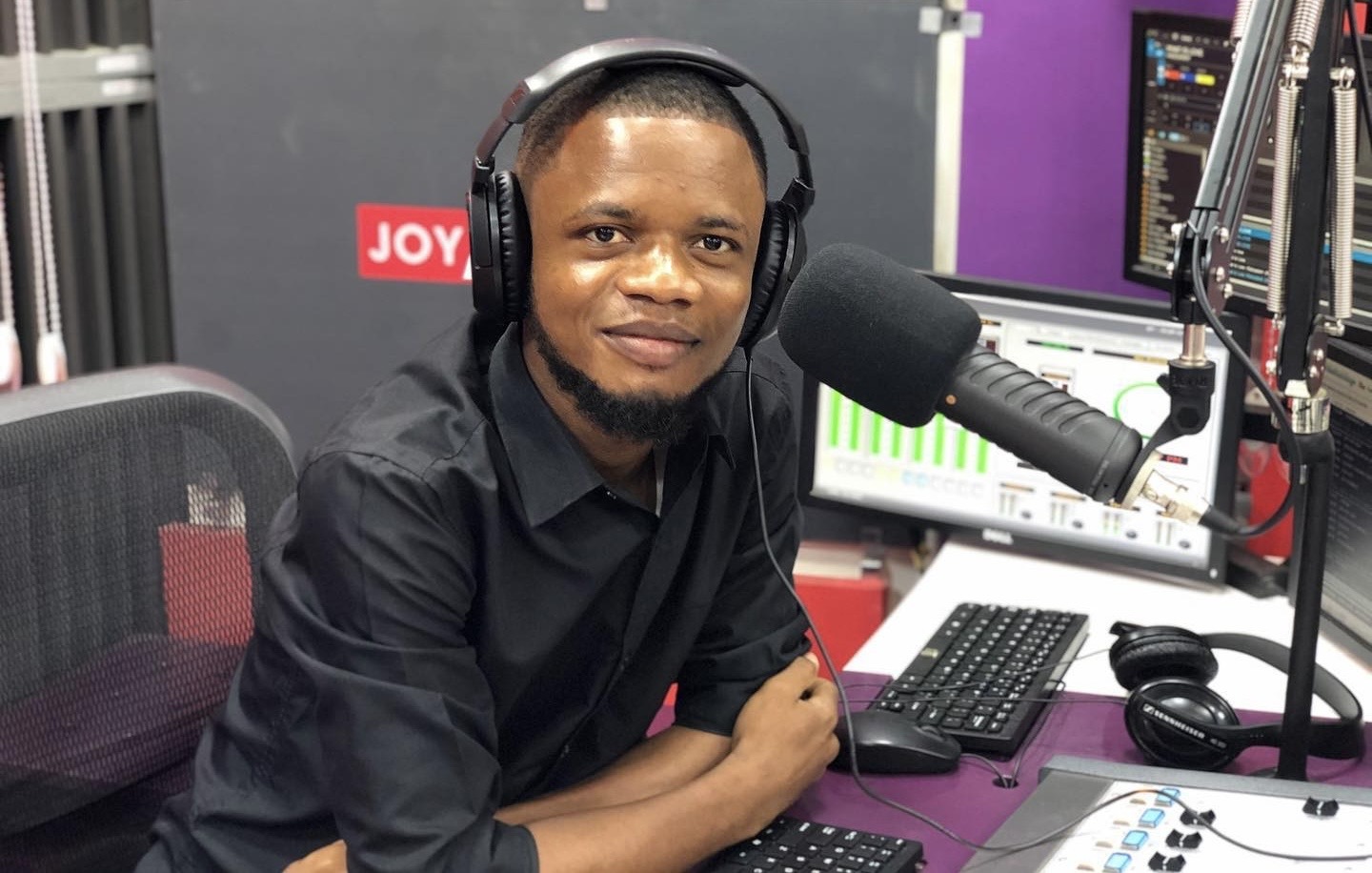
In a powerful and emotionally charged edition of Fellow Ghanaians aired on Wednesday, October 22, 2025, Joy FM and Joy Prime TV journalist Kwaku Asante delivered one of the most striking critiques yet of Ghana’s Parliament and society over the reintroduction of the Human Sexual Rights and Family Values Bill, popularly known as the anti-LGBTQ bill.
The segment, which quickly gained attention online, saw Asante question why lawmakers are dedicating so much attention to policing private lives when the nation continues to grapple with unemployment, corruption, poverty, and crumbling social systems.
“Are There Not Truly Pressing Problems in This Country?”
Kwaku Asante began with a piercing question that set the tone for his commentary:
“Are there not truly pressing problems in this country than to police the bedrooms of consenting adults? Have we solved the issue of joblessness, corruption, poverty, insecurity, poor health care, and failing education?”
He went on:
“Have we fixed the roads that are killing our citizens daily or paid the nurses, teachers, and civil servants—who are going months without salaries?”
The journalist criticised what he called a misplaced national obsession, questioning why there is “so much legislative energy being poured on issues of people’s private sexual behaviour,” which he noted “causes no personal harm directly in the immediate term.”
“I Am Not Here to Endorse Homosexuality… It Is About Justice, Freedom, and the Kind of Nation That We Claim to Be”
Addressing misconceptions about his stance, Asante clarified that his remarks were not an endorsement of homosexuality but a defence of democratic and human rights principles.
“We have to be clear, fellow Ghanaians. I am not here to endorse homosexuality. That is a purely private matter, and with many Ghanaians, I have my own cultural and moral boundaries. But opposing the criminalisation of people for their private choice is not the same as supporting those choices. It is about justice, freedom, and about the kind of nation that we claim to be.”
He continued with a reflection on democracy:
“Fellow Ghanaians, the measure for democracy is not how it treats the majority or the agreeable, but how it protects its minorities. The purpose of law is not to reflect our collective emotions but to safeguard the liberties that make civilisation possible. We do not build a moral nation by legislating morality into handcuffs.”
“If This Bill Passes, Me Standing Here Will Be Jailed”
Asante condemned the reintroduced bill’s punitive measures, which include imprisonment for those accused of identifying as LGBTQ+, supporting them, or advocating for their rights.
“If this bill passes, me standing here will be jailed because I’m asking for their rights to be safeguarded. It preaches, in my opinion, violence towards gay people.”
He warned that the proposed law “reaches beyond private conduct into speech, thoughts, and even association,” calling it a dangerous precedent.
“So, fellow Ghanaians, we have to ask — we are a very moral society, but since when did we become so insecure in our moral confidence that we need to jail people just to prove that we are more righteous? The Ghana that I have always known is one of tolerance, of community, of warmth. It does not fear diversity. It draws strength in it. Yet, this bill seeks to create fear, shame, and suspicion amongst its citizens. It will not build families; it will only break them. It will not promote morality. It will promote hypocrisy and hate.”
He added that history has always judged such actions harshly:
“You must remember that every era of moral panic in human history has always found a group to scapegoat — witches, heretics, left-handers, those who marry across tribes, or those who simply believe differently. History has never been kind to societies that legislate hate, and future generations would look back at us now and wonder how a country that prides itself on hospitality used its laws to hunt down its own citizens.”
“When You Criminalize People for Who They Are, You Push Them Underground”
Asante warned that such legislation would have dire consequences for human rights, social cohesion, and access to essential services.
“When you criminalize people for who they are, you push them underground — you deny them access to healthcare, education, and to jobs. You make them targets of violence. It turns citizens into fugitives within their homeland.”
“Section 104 Was Not Written by Ghanaians — It Was Imposed by Colonial Rulers”
The journalist also challenged the claim that homosexuality or its tolerance is “un-African,” tracing Ghana’s anti-LGBT laws back to British colonial impositions.
“And those who will say, really, this is un-African, I say so is criminal legislation, so is imported in the nineteenth-century British moral code into twenty-first-century Ghana. The very law our MPs are seeking to expand, Section 104 of the Criminal Offences Act, was not written by Ghanaians. It was imposed by colonial rulers who saw Africans as needing moral correction. Is that the legacy we want to deepen?”
He then called out what he described as “moral laziness.”
“Thinking that criminalising the private sexual lives of consenting adults makes us holy—it does not. What it does is distract us from the real moral practices of our time: greed, corruption, inequality, environmental destruction, and injustice. These are the things that are truly tearing our social fabric apart.”
Asante questioned why Ghana’s lawmakers do not show the same zeal in addressing national crises.
“Yet we will not write laws with the same zeal to punish people who steal the people’s money, those who are poisoning our rivers, or destroying our forests. If only our lawmakers pursued illegal mining, corruption, and environmental degradation with the same passion with which they pursue this bill, this country would truly be a paradise by now.”
“We Take Loans from Countries That Protect LGBTQ+ Rights — Yet Jail Our Own Citizens”
Turning to Ghana’s international reputation, Asante cautioned against the diplomatic and economic fallout the bill could trigger.
“We must also consider the global implications. This country has long been respected internationally for its democracy, its peace, and its moderation. This bill, however, casts a long shadow on that reputation. It risks isolating us diplomatically, economically, and threatening aid and cooperation. For what? To prove our moral purity to our own selves?”
He pointed out the irony in Ghana’s global interactions:
“The irony is striking. We take loans from countries that fully protect LGBTQ+ rights. We travel to their cities for conferences, for vacation, for education, for health, for pleasure—yet will jail our own citizens for simply existing in the same way as those abroad. What kind of moral inconsistency is that?”
“True Strength Lies Not in Punishing Difference, But in Compassion and Conversation”
Acknowledging the fears and emotions behind the bill, Asante appealed to Ghanaians to resist legislating fear in the name of morality.
“Whilst I understand the emotions, as many fear that without such laws our values will erode, laws cannot replace parenting or moral education. Our values as truly Ghanaians are not to jail others to prove it.”
He urged Parliament to focus on genuine national challenges rather than moral policing.
“True strength lies in not punishing difference, but in confronting it, confidence, compassion, and then conversation. So, I say to our MPs, those of you sponsoring this bill and all of you who support it, you may be doing this from a place of care, but I must ask you, respectfully and with all due respect: when was the last time Parliament sat all night to debate how to stop illegal mining which has destroyed our rivers? When was the last time we saw such unity across party lines over how to fix our schools, equip our hospitals, or end the cruel practice of posting teachers and nurses without paying them for months? Why is this the issue that unites all of us so passionately?”
He concluded with a defining statement about democracy and humanity:
“This country is not a moral desert. We are always people of faith, conscience, and community. But we are also a constitutional democracy. And in a democracy, a state’s role is not to enforce uniformity in private life, but to guarantee freedom within the public. We must not dream at the back of fear and claim to promote humanity while legislating hate.”
By Rightify Ghana Communications Desk
For more updates on human rights, democracy, and freedom of expression in Ghana, visit www.rightifyghana.org or follow @RightifyGhana on social media.
 Rightify Ghana