
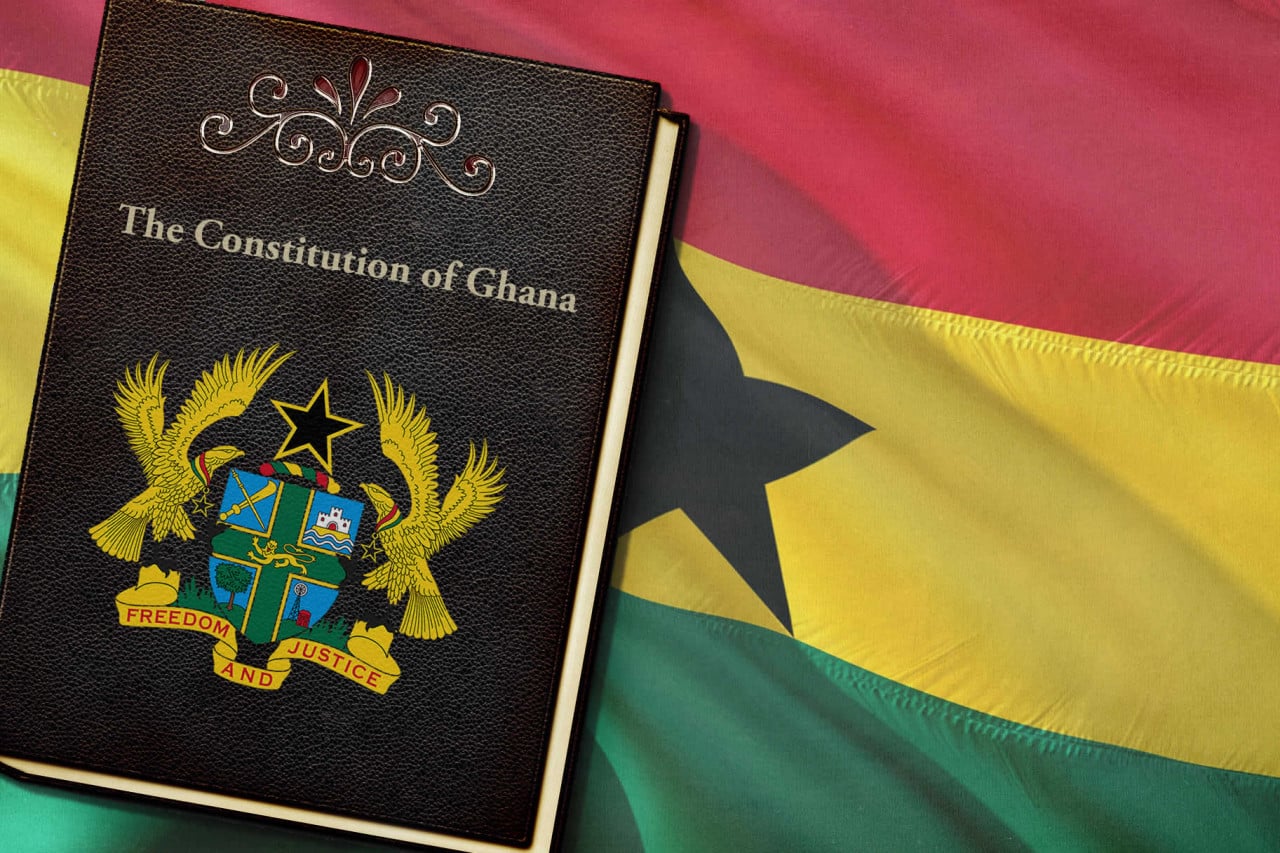
Ghana’s 1992 Constitution is widely regarded as a stabilising force that guided the nation through post-military rule transitions, established democratic institutions, and codified fundamental rights. But after more than thirty years, it is evident that parts of the Constitution no longer reflect Ghana’s evolving social structure, technological landscape, and human rights obligations.
The Constitutional Review Committee (CRC), established to assess and modernise the Constitution, produced one of the most far-reaching and progressive analyses in the history of constitutional reform in Ghana.
Chapter Six—“Leaving No One Behind: Towards a Just and Equitable Society” — is arguably the moral and human rights backbone of the entire report.
It addresses systemic inequalities and gaps in protection affecting women, children (including intersex children), persons with disabilities, digital users, vulnerable groups, and minorities. It also tackles structural issues such as the death penalty and weaknesses in the rights-limitation framework.
This article provides the most thorough, long-form analysis of these reforms, explaining what they mean for Ghana’s future and why they must be adopted without delay.
1. Human Rights for a Modern Society: Reforming Article 12(1)
CRC Section 6.5 • Page 97
The Problem:
Article 12(1) is supposed to be the gateway provision to Ghana’s human rights protections. Yet its ambiguous phrasing—“where applicable”—has historically weakened enforcement. The phrase has been interpreted to mean that only the State is bound by fundamental rights, while private actors may not be.
This interpretation is outdated. In today’s Ghanaian society, private actors wield equal or greater influence than the State in areas like:
• employment
• education
• housing
• healthcare
• traditional governance
• religious institutions
• security services
• digital platforms
• financial institutions
Private power can violate rights as easily as State power.
Examples:
• Schools expelling girls for pregnancy or appearance
• Landlords refusing to rent rooms to LGBTQI+ persons
• Churches subjecting children to “deliverance” abuse
• Employers firing women because they are pregnant
• Private security assaulting street hawkers
• Hospitals denying services to marginalized groups
The Constitution must reflect these realities.
What the CRC Proposes
The CRC recommends making Article 12(1) explicitly binding on both the State and private actors by:
• Removing “where applicable”
• Affirming horizontal and vertical application of rights
• Making it clear that political parties, traditional authorities, companies, schools, employers, religious bodies, digital platforms, and individuals are all bound by constitutional rights
Why This Reform Is Transformational
It expands human rights enforcement beyond government abuse to include everyday injustices committed by private power.
It empowers citizens to challenge discrimination in workplaces, schools, markets, communities, hospitals, and homes.
This reform would mark Ghana’s transition from a narrow, State-focused rights model to a modern, people-centered rights regime.
2. A Stronger Rights Limitation Clause: Ending the Abuse of “Public Morality”
CRC Section 6.6 • Pages 97–98
The Problem:
The current Constitution contains inconsistent and vague rights-limitation provisions, often allowing governments to restrict freedoms based on subjective justifications such as:
• “public morality”
• “public interest”
• “public order”
• “national security”
Throughout Ghana’s history, such justifications have been weaponised to silence or delegitimise:
• LGBTQI+ communities
• feminists and women’s rights activists
• journalists and media houses
• political opponents
• minority religious groups
• cultural expression
• protesters
• students
• artists
Such vague limitations undermine democratic participation and suppress dissent.
What the CRC Proposes
A unified, strict rights-limitation clause requiring the State to demonstrate:
- Legality – The limitation must be established by law.
- Legitimate purpose – It must protect a constitutional value.
- Necessity – There must be a real, compelling need.
- Proportionality – The restriction cannot be excessive.
- Least restrictive means – No milder alternative exists.
Why This Reform Matters
This clause protects citizens from the arbitrary use of power by ensuring fundamental freedoms—speech, assembly, privacy, equality—cannot be curtailed without rigorous justification.
It shifts Ghana closer to global constitutional standards in South Africa, Canada, and Kenya.
Most importantly, it prevents moral panic or public pressure from becoming grounds for violating rights, particularly for minorities.
3. Abolishing the Death Penalty: A Constitutional Stand for Human Dignity
CRC Section 6.10 • Page 100
Ghana last executed a person in 1993, but the death penalty still exists in the Constitution. This contradiction creates both moral and legal inconsistency.
Why Abolition Is Necessary
• Irreversibility: Wrongful convictions cannot be undone.
• Discrimination: The poor are disproportionately sentenced to death.
• Ineffectiveness: Research shows it does not deter crime.
• Global trend: Most countries worldwide are abolishing it.
• Human dignity: The death penalty violates the core constitutional value of human dignity.
What the CRC Proposes
• Remove all constitutional references to capital punishment (Articles 3, 13, 19, 72 & 94).
• Prohibit Parliament from passing any law reinstating it.
• Convert existing death sentences to life imprisonment.
Why This Reform Is Historic
It entrenches abolition permanently, aligning Ghana with international human rights norms and acknowledging decades of moral practice.
4. Protecting Bodily Integrity of Children — Especially Intersex Children
CRC Section 6.14 • Pages 104–105
This is one of the most progressive and urgently needed reforms.
The Reality:
Intersex children—born with natural bodily variations—are often subjected to:
• unnecessary genital surgeries
• irreversible cosmetic procedures
• hormone interventions
• medical decisions made for parents’ comfort or social acceptance
• violations of bodily integrity without consent
These interventions have long-term physical and psychological consequences.
What the CRC Proposes
Article 28: Children’s Rights
• Recognise bodily integrity as a constitutional right
• Prohibit irreversible, non-consensual, non-medically necessary procedures
• Prohibit harmful “normalising” surgeries on intersex children
• Require best-interest assessments and independent medical review
Article 15: Human Dignity
• Non-therapeutic procedures on minors constitute violations of human dignity
Article 30: Rights of Vulnerable Persons
• Strict safeguards for treatments with long-term consequences
• State obligation to ensure specialized protection
Why This Reform Is Groundbreaking
It positions Ghana among the few nations globally that constitutionally protect intersex children from harmful medical practices.
It affirms that every child’s body deserves dignity, autonomy, and respect.
5. Digital Rights and Privacy: Modernising Article 18 for the Surveillance Age
CRC Section 6.16 • Pages 106–108
The Problem:
Ghana’s Constitution was written before:
• smartphones
• mobile money
• biometric voter IDs
• nationwide CCTV networks
• AI surveillance
• big data
• digital profiling
• social media monitoring
• cybercrime laws
Citizens are now more vulnerable than ever to data exploitation by both State and private actors.
What the CRC Proposes
• Recognise informational privacy as a constitutional right
• Regulate collection, use, storage, and disclosure of personal data
• Protect against:
– mass surveillance
– profiling
– digital tracking
– interception of communication
• Apply privacy obligations to both State and private institutions
• Provide safeguards to protect free expression and political participation
Why This Matters
Privacy is not only about secrecy—it protects:
• freedom of the press
• freedom of political participation
• freedom from discrimination
• autonomy and dignity
• safety of vulnerable populations
This reform brings Ghana into the 21st century.
6. Transformative Women’s Rights Reforms: Equalising Public, Private, and Economic Life
CRC Section 6.15 • Page 106
The CRC’s women’s rights proposals are some of the most comprehensive ever recommended for Ghana.
Key Components
Article 27
• Remove gendered, stereotypical language
• Guarantee autonomy, bodily integrity, equality, and economic independence
• State must prevent gender-based violence, harassment, and harmful practices
Article 17
• Provide explicit constitutional basis for affirmative action
• Ensure substantive equality in leadership, employment, and education
Article 35(6)
• Enforce gender balance:
→ No more than two-thirds of any public body can be of one gender
Article 36
• Equal access to land, credit, capital, inheritance, and work
• Protection for women in informal and vulnerable labour sectors
Why This Is Transformational
It shifts gender equality from rhetoric to law—from aspiration to obligation.
It addresses root causes of inequality and places women’s rights at the heart of national development.
7. Strengthening the Rights of Persons with Disabilities
CRC Section 6.17 • Page 108
What the CRC Proposes
• Replace “disabled persons” with “Persons with Disabilities”
• Strengthen duties to promote inclusion, accessibility, and respect
• Align the Constitution with the UN CRPD
Why This Matters
It recognizes disability as a social, not personal, limitation and commits the State to removing barriers.
8. Recognising the Right to Health as a Constitutional Commitment
CRC Section 6.18 • Pages 109–110
The CRC elevates the right to health from a policy idea to a constitutional duty.
What It Means
• Government must ensure accessible, equitable, quality healthcare
• Health policies must reflect human dignity and equity
• Future governments must prioritise public health and universal access
Why This Matters
COVID-19 revealed the deep inequalities in Ghana’s health system.
A constitutional right to health provides a permanent foundation for reform.
Conclusion: A New Constitutional Vision for Ghana
These reforms together form a powerful, cohesive vision:
A Ghana where dignity is protected.
A Ghana where rights are universal.
A Ghana where no child’s body is altered without consent.
A Ghana where women participate fully and equally.
A Ghana where technology does not become a tool of oppression.
A Ghana where the death penalty is gone forever.
A Ghana where persons with disabilities are respected.
A Ghana where health is a right—not a privilege.
The CRC’s Chapter Six recommendations are not merely amendments.
They are a blueprint for a more humane, inclusive, rights-based Ghana.
This is the moment to act.
This is the Constitution Ghana deserves.
This is the future we must build—together.
Read full report below:
 Rightify Ghana