
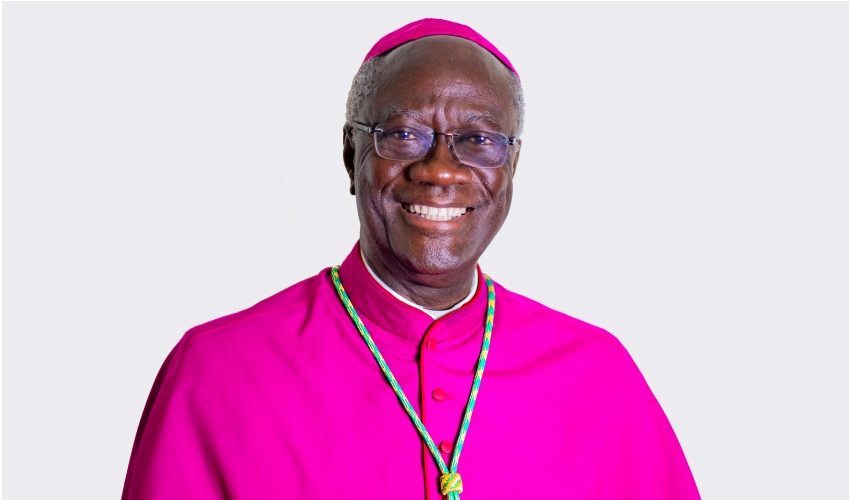
Remarks by the Archbishop of the Catholic Archdiocese of Accra, Most Rev. John Bonaventure Kwofie, calling for the exclusion of gay people from Catholic seminaries have reignited concerns about stigma, selective moral outrage, and the Church’s long-standing failure to adequately address sexual abuse as a criminal matter.
Speaking on Wednesday, January 14, at the opening of the 12th Regional Episcopal Conference of West Africa (RECOWA) Rectors’ Conference at St. Paul’s Catholic Seminary, Sowutuom, in Accra, Archbishop Kwofie claimed that homosexuality and what he termed “gay culture” were “growing” within Catholic seminaries and urged seminary authorities to take decisive action against it.
“I am going to talk about one thing that is growing up like a monster in the Seminaries. Please do your best to weed out people of such orientation from our Seminaries because it is not only an abomination to Priestly attitude but also does not make the gifts of celibacy worth living. It is homosexuality and gay culture,” the Archbishop said.
In further remarks that have drawn criticism for their dehumanising tone, he exclaimed, “We are men; going for women doesn’t go well for us. But men going for men!”
Archbishop Kwofie, a member of the Congregation of the Holy Spirit (Spiritans/Holy Ghost Fathers/CSSp.), argued that priestly vocation requires what he described as “effective formation” and warned that the acceptance of “gay culture” contradicts priestly life and Catholic teaching. He insisted that the Church’s position on homosexuality “has not changed” and remains grounded in the Magisterium.
According to the Archbishop, Catholic doctrine does not permit the admission of individuals who practice homosexuality or who support what he referred to as gay culture into seminaries or Holy Orders.
To justify this position, he cited the Dicastery for Culture and Education’s November 2005 Instruction Concerning the Criteria for the Discernment of Vocations with regard to Persons with Homosexual Tendencies in view of their Admission to the Seminary and to Holy Orders. Referencing the document, he said that “those who practice homosexuality” and therefore “present deep-seated homosexual tendencies or support the so-called ‘gay culture’” do “find themselves in a situation that gravely hinders them from relating correctly to men and women.”
The Vatican Dicastery for Culture and Education, in alignment with the Dicastery for Divine Worship and the Discipline of the Sacraments, states in the same instruction that the Catholic Church “cannot admit to the seminary or to holy orders those who practise homosexuality, present deep-seated homosexual tendencies or support the so-called ‘gay culture.’”
“One must in no way overlook the negative consequences that can derive from the ordination of persons with deep-seated homosexual tendencies,” the Vatican Dicastery added in the instructions issued in Rome on 4 November 2005, the Memorial of St. Charles Borromeo, Patron of Seminaries.
Quoting this position, Archbishop Kwofie told conference participants, “This excerpt shows that the norms regarding sexuality and the gay culture in the Seminaries have not changed.”
These statements were delivered at a regional gathering held under the theme “Building on a Rock: A Solid and a Holistic Formation,” which brought together Rectors and Formators from across West Africa and concluded on January 17.
While Archbishop Kwofie praised the work of Rectors and pledged institutional backing – saying, “My dear people, you as Rectors in West Africa, you are given a responsibility in forming future Priests. This is an onerous task. We are behind you” – LGBTQI advocates argue that such rhetoric reinforces fear, exclusion, and harm.
In addition, true “holistic formation” cannot coexist with a culture that stigmatizes sexual orientation while failing to confront sexual violence with equal urgency and transparency. They note that homosexuality is repeatedly framed as a moral threat, while sexual abuse – an actual crime with lifelong consequences for survivors – is too often treated as an internal disciplinary issue rather than a matter for criminal justice.
Church’s long-standing failure to adequately address sexual abuse as a criminal matter
While these words were delivered publicly and forcefully, critics argue that similarly harsh language has not been used by Church leadership against priests accused of sexual abuse – even in cases involving survivors in Accra itself.
In 2021, a survivor (woman) of sexual abuse involving a Catholic priest in Accra wrote a letter directly to Archbishop Kwofie. That letter, shared online, became a catalyst for other survivors to begin speaking publicly about their own experiences of abuse within the Church.
The wave of testimonies exposed not only the depth of harm suffered by survivors, but also systemic weaknesses in how the Church handled such cases.
Notably, in that 2021 case and others that followed, the matter was treated internally by the Church. The police were not involved, despite calls from lawyers and human rights advocates that sexual abuse is a crime and must be handled by state authorities, not solely through internal ecclesiastical processes.
From a human rights perspective, critics note that language describing gay people as a “monster” to be “weeded out” contributes to an environment of hostility that can legitimise discrimination, mental health harm, and violence against LGBTQ persons, both within religious spaces and in wider society. They argue that equating sexual orientation with moral failure or incapacity for spiritual life ignores the lived realities of LGBTQ Catholics, including priests and seminarians who have served faithfully for decades.
LGBTQ advocates and survivor-led groups stress that equating gay identity with moral or spiritual danger fuels discrimination and fear, and distracts from the real, documented harm caused by abuse of power within religious institutions. They argue that the Church’s credibility on morality is undermined when it polices identity more aggressively than it confronts violence, exploitation, and impunity.
Advocates further contend that genuine “holistic formation” should prioritise human dignity, psychological wellbeing, and non-violence, and question whether exclusionary approaches truly reflect the pastoral mission of the Church or the growing global calls for compassion, inclusion, and respect for LGBTQ persons.
 Rightify Ghana