
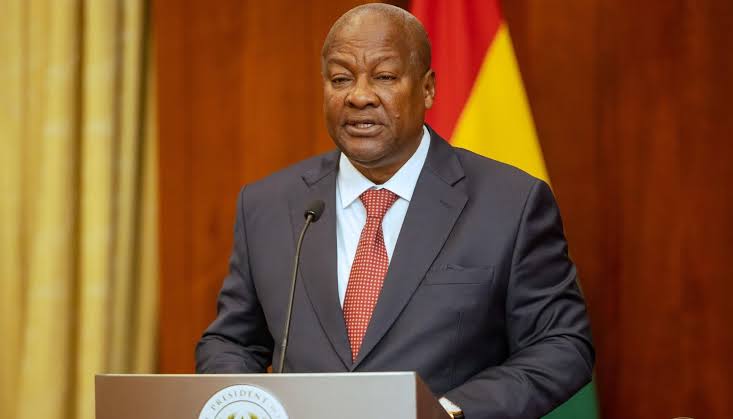
PHILADELPHIA — President John Dramani Mahama has called on international partners to respect Ghana’s sovereignty, stating that the country’s public policies are grounded in its legal framework, cultural context, and national consensus.
The President made the remarks at the World Affairs Council of Philadelphia, where he received the International Statesperson Award in recognition of his contributions to democratic governance and international diplomacy. The engagement comes shortly after Lincoln University cancelled a planned visit and honorary doctorate for the Ghanaian leader amid concerns linked to Ghana’s anti-LGBTQ legislation.
A Sovereign Mandate
Addressing an international audience, President Mahama emphasised that decisions regarding LGBTQ+ issues in Ghana are shaped by domestic processes rather than external pressure. He noted that the country’s policy direction is guided by the 1992 Constitution of Ghana and what he described as the collective will of the Ghanaian people.
He stressed that the Human Sexual Rights and Family Values Bill, 2025, currently before the Parliament of Ghana, is a private member’s bill and not a government-sponsored initiative, indicating that it is being driven by individual legislators rather than the Executive.
President Mahama further argued that debates around LGBTQ+ rights are not unique to Ghana, noting that the issue remains contentious globally. He pointed out that even in the United States, there are multiple states that have enacted or are considering laws that restrict aspects of LGBTQ+ rights, underscoring the complexity and diversity of positions on the issue worldwide.
“What the eventual nature of the bill would be, nobody can second-guess Parliament, and I, as President, cannot anticipate Parliament in respect of that bill,” he stated.
Democracy and Due Process
The President underscored that Ghana’s democratic institutions are functioning as designed, pointing to the openness of the legislative process.
- Public Input: He noted that memoranda are being accepted from individuals and groups across society.
- Civil Society Engagement: He highlighted the active participation of civil society organisations in parliamentary deliberations.
- Representative Outcome: “I believe that the representatives of the people will make the will of Ghanaians reflect in whatever eventually comes out,” he said.
Confidence in Institutions
President Mahama also stressed the resilience of Ghana’s governance systems, citing the country’s political tolerance and institutional independence.
“That level of tolerance in the political atmosphere is what has given Ghana the advantage it has. We have a relatively independent judiciary that we have confidence will adjudicate matters fairly.”
Diplomacy Amid Debate
The award from the World Affairs Council of Philadelphia marks a notable moment of continued international engagement, even as Ghana’s domestic policy debates—particularly around the Human Sexual Rights and Family Values Bill, 2025—draw increased global attention.
The development highlights the intersection of sovereignty, democratic process, and international scrutiny, as Ghana navigates both internal legislative deliberations and its external diplomatic relationships.
 Rightify Ghana