
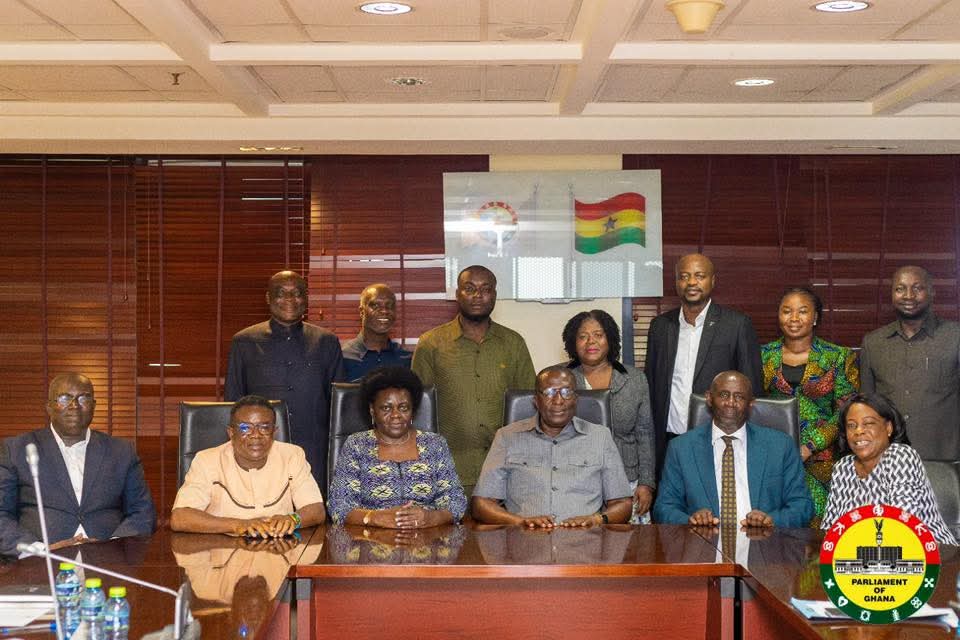
A Ugandan parliamentary delegation has undertaken high-level engagements in Accra as preparations intensify for the 4th African Inter-Parliamentary Conference on Family, Sovereignty and Values – an event widely criticised by human rights observers as a coordinated anti-LGBTQ+ and anti-rights legislative platform.
On April 16, 2026, the delegation, led by Sarah Opendi, held separate meetings with the Parliament of Ghana and the Ministry of Communications, Digital Technology and Innovations. The visit forms part of advance coordination for the conference scheduled for May 27–30, 2026, in Accra – the first time the gathering will be hosted in West Africa.
Parliamentary Engagement: Deepening Legislative Coordination
At Parliament, the Ugandan delegation met with the Second Deputy Speaker, Andrew Asiamah Amoako, alongside several Members of Parliament, including key sponsors of Ghana’s ‘Human Sexual Rights and Family Values Bill, 2025,’ anti-LGBTQ+ bill, such as John Ntim Fordjour. The Clerk to Parliament, Ebenezer Ahumah Djietror, also participated in the discussions.
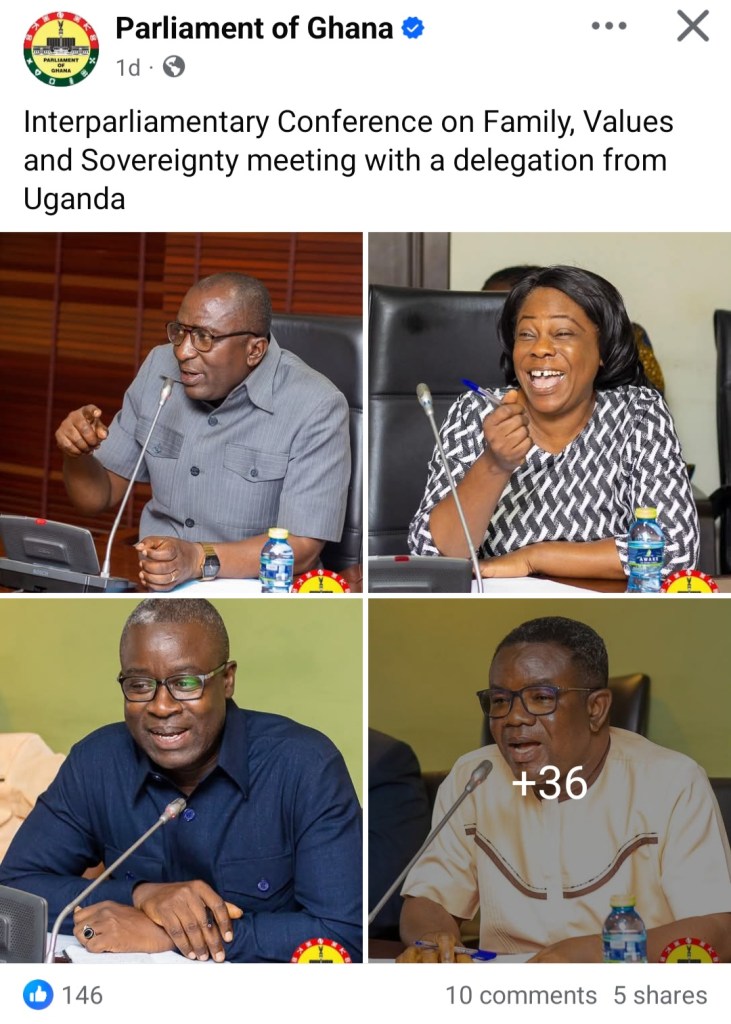
Although details of the meeting were not publicly disclosed in Parliament of Ghana’s post on Facebook, the engagement reflects a growing pattern of legislative alignment between Ghana and Uganda. Uganda has actively positioned itself as a model following its 2023 Anti-Homosexuality Act, using parliamentary exchanges and conferences to promote policy replication across African legislatures.
Ministerial Talks: Coordinating a Continental Framework
The Ugandan delegation also held bilateral discussions with the Minister for Communications, Digital Technology and Innovations, Hon. Samuel Nartey George.
According to a statement shared at the Ministry’s Facebook page and website, the meeting focused on “strengthening coordination, ensuring inclusive participation across African states, and advancing a shared framework to support continental dialogue on governance and policy priorities.”
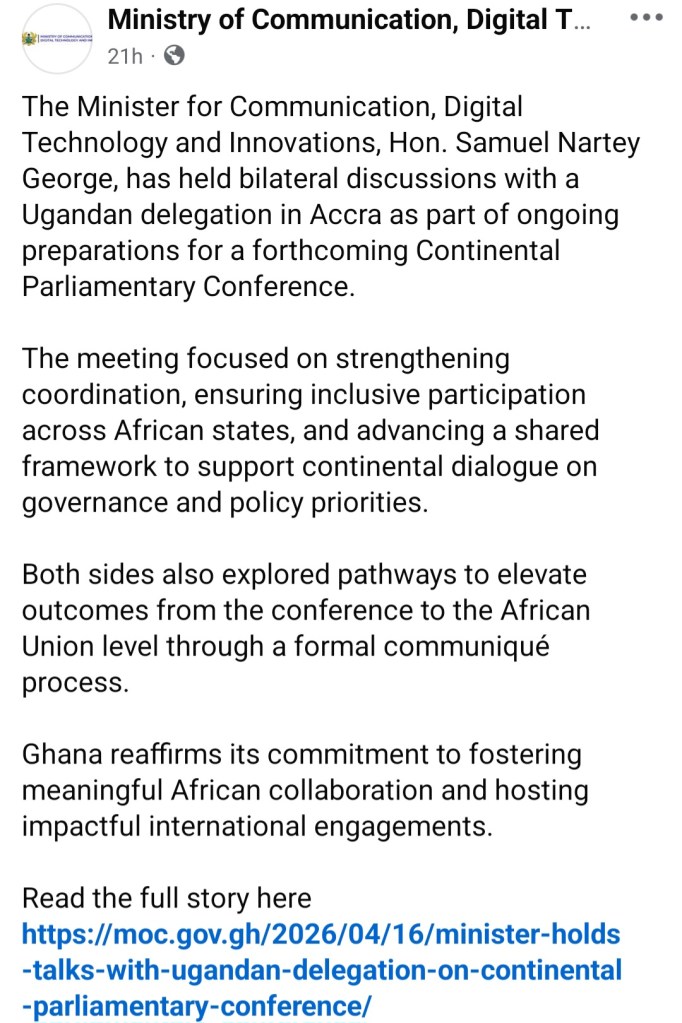

Both sides further explored pathways to elevate conference outcomes to the African Union level through a formal communiqué process—signalling an intention to embed the conference’s resolutions within continental governance structures.
Organisers and Agenda: Toward a “Charter of Values and Sovereignty”
The conference is being coordinated by a coalition of regional and continental actors, including the Inter-parliamentary Network on Family Values, Family Watch Africa, African Bar Association, and the Foundation for African Heritage. Key partners also include the Christian Council International.
These organisers are advancing a broader initiative to develop and promote a “Charter of Values and Sovereignty”—a proposed framework intended to guide legislation and policy across African states on issues related to family, culture, and governance.
At the 2025 conference, participants explicitly called for outcomes of the gathering to be mainstreamed through African legislatures, the African Union, and the Organization of African First Ladies, underscoring ambitions to move beyond dialogue into formal policy adoption and institutional integration.
Conference Context: Transnational Anti-LGBTQ Legislative Network
As highlighted in earlier reporting, the African Inter-Parliamentary Conference series has evolved into a key platform for coordinating anti-LGBTQ legislation and broader restrictions on sexual and reproductive health and rights (SRHR).
Such conferences have been linked to international conservative organisations such as Family Watch International and World Congress of Families – both designated as hate groups by the Southern Poverty Law Center. These actors have contributed to policy framing, legislative templates, and messaging strategies across multiple convenings.
Ghana’s hosting role also reflects historical precedent. In 2019, Accra hosted a regional conference of the World Congress of Families, after which domestic coalitions mobilised against Comprehensive Sexuality Education policies and later contributed to the drafting of the Human Sexual Rights and Family Values Bill introduced in 2021.
Strategic Implications: From National Coordination to Continental Policy Influence
The April 16 engagements highlight not only logistical preparations but also a deeper strategic alignment aimed at shaping policy trajectories across the continent.
With organisers seeking to formalise a Charter of Values and Sovereignty and integrate conference outcomes into African Union processes, the Accra meeting represents a shift from national legislative efforts to coordinated continental policy influence.
As Ghana prepares to host the conference, analysts warn that the country risks becoming a central node in a transnational anti-rights network—potentially accelerating the spread of restrictive laws across West Africa and embedding them within broader African governance frameworks.
The Accra conference, therefore, is increasingly viewed not just as a diplomatic event, but as a pivotal moment in the institutionalisation of a continent-wide legislative agenda targeting LGBTQI+ rights and broader SRHR protections.
 Rightify Ghana